
Capital Allocation: How to Size Your Trades Without Blowing Up
Capital Allocation: How to Size Your Trades Without Blowing Up.
1. Introduction: Why Capital Management Matters
When traders first discover delta-neutral strategies, they often feel like they’ve stumbled upon a cheat code. The pitch is seductive: hedged against direction, earn yield in any market.
It sounds like free money.
But if that were true, we’d all be retired already.
The reality is harsher. Most traders who flock to delta-neutral do so for the wrong reason... they chase the number flashing on their screen. APR. It’s intoxicating to see 30%, 50%, even 100% in a world where savings accounts still pay pennies.

And yet, chasing APR without managing capital is the fastest way to ruin.
Why? Because yield is meaningless without survival. And survival depends on one thing: capital management.
It’s not the trades you enter that separate amateurs from professionals. It’s how you size them, how you allocate, and how you survive the inevitable storms.
This is why capital management matters:
- It’s the invisible hand that keeps you compounding when others blow up.
- It’s the silent divider between temporary tourists and long-term professionals.
- It’s the discipline that allows you to stay in the game long enough for skill to matter.
Chasing APR is easy. Anyone can do it. Capital management is harder. That’s why most traders never master it. But if you do, it becomes your ultimate edge — the edge of longevity.
2. The “Two Portfolios” Mindset
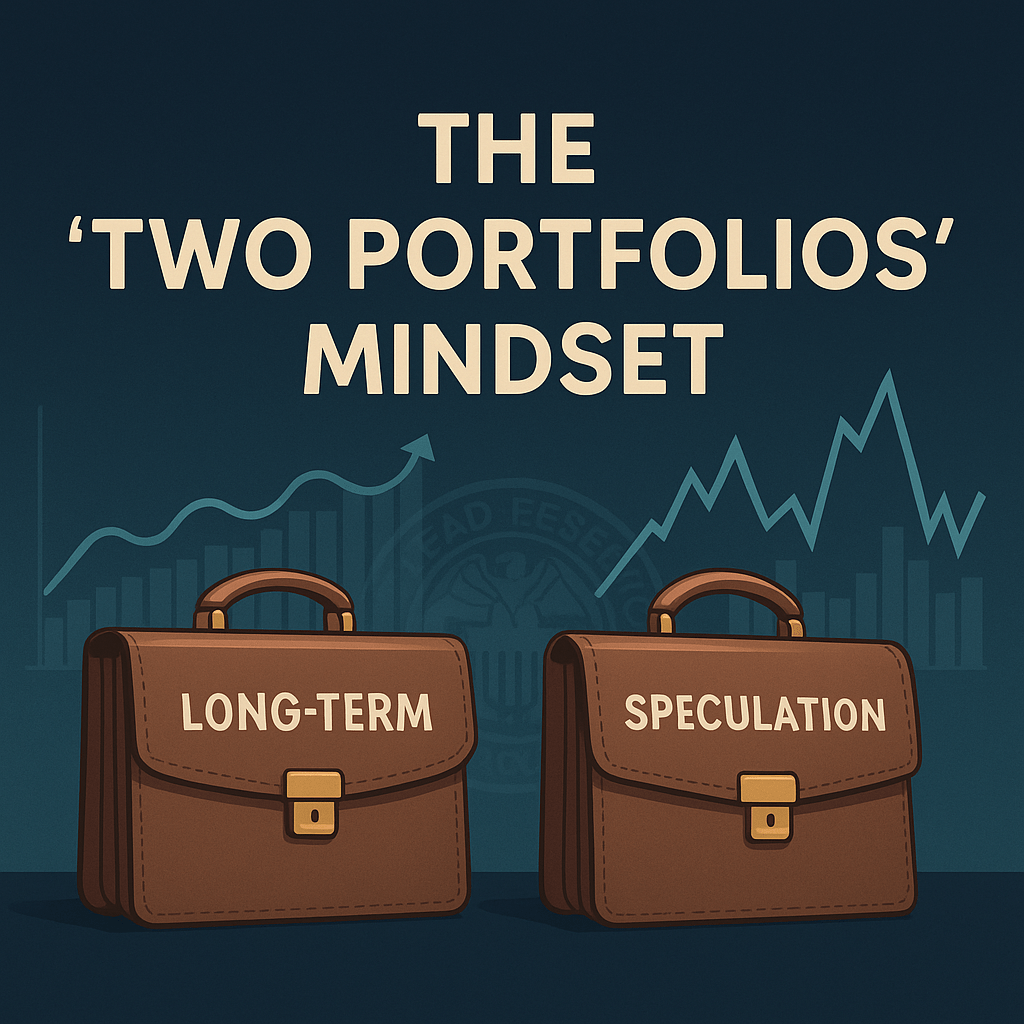
Before we even talk numbers, you need to adopt a mindset shift: treat your capital as two separate portfolios.
- Speculative Stack: Your sandbox. This is where you take directional bets, YOLO trades, memecoins, whatever scratches the itch. If it goes to zero, you’ll be annoyed, but not ruined.
- Delta-Neutral Yield Stack: Your consistency engine. This is where your compounding happens. This stack doesn’t chase moonshots. It aims for stability and survival.
Why separate them? Because psychology is everything in trading.
If you mix your speculative bets with your yield stack, every bad trade bleeds into your consistent compounding machine. You contaminate stability with chaos.
Think of it like personal fitness: you don’t mix dessert with your protein shakes. One is indulgence, the other is fuel. The same logic applies here.
An Analogy: The Castle and the Battlefield
Your Delta-Neutral Yield Stack is the castle. Thick walls, consistent supply, built to endure.
Your Speculative Stack is the battlefield. Risky, chaotic, unpredictable.
The castle survives even if the battlefield is lost. But if you bring the chaos inside the walls — if you expose the castle to battlefield risk — everything crumbles.
This mindset creates psychological clarity. It gives you permission to take risks in one sandbox while protecting the engine of your long-term wealth.
Professionals obsess over this separation. Amateurs blur the lines and wonder why they can’t compound.
3. How Much Capital to Allocate
Now comes the practical question: how much of your total net worth should go into the yield stack?
The answer depends on your experience, risk tolerance, and ability to stomach volatility. Let’s walk through the progression:

Beginners: 5–15%
If you’re new, you should dip your toes — not dive in headfirst.
Allocating 5–15% of your total portfolio to delta-neutral strategies lets you learn without existential risk. Mistakes are inevitable, but they’ll be survivable.
Psychologically, this protects you from panic. You won’t obsess over every APR fluctuation if your rent money isn’t on the line.
Intermediates: 20–40%
Once you’ve built confidence, you can scale up. At this stage, delta-neutral can become a pillar of your overall portfolio.
The trade-off? You’re tying up a larger portion of capital in strategies that require monitoring. This isn’t passive staking. You need systems, dashboards, and discipline.
Advanced: 50%+
Seasoned professionals may allocate half or more of their stack to delta-neutral.
But even here, almost nobody goes “all in.” Why? Counterparty risk. You are still relying on centralized exchanges. Hacks, outages, or black swan events remain possible.
The pros never forget this. They diversify across platforms, keep dry powder, and treat even the most stable strategies as risk-managed, not risk-free.
4. Sizing Individual Positions
Once you’ve decided how much capital goes into your yield stack, the next layer is how to size individual trades.
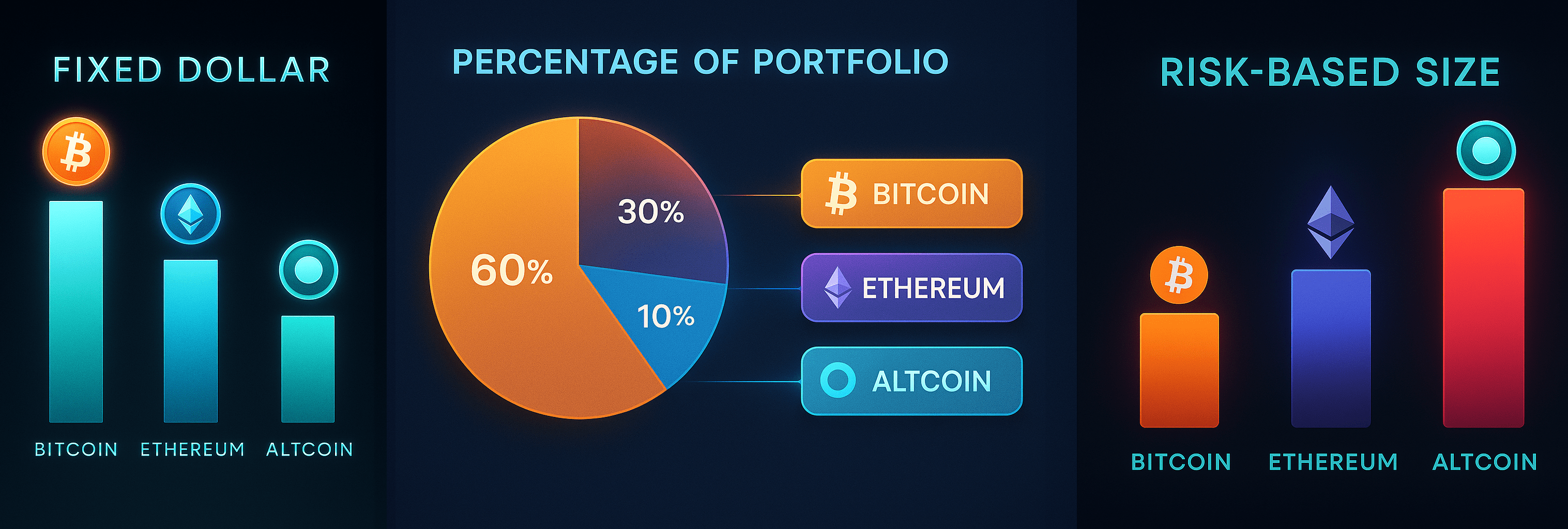
There are three common models:
Model 1: Fixed Dollar Sizing
This is the simplest approach. Every trade gets the same dollar amount.
If you’re running a $10,000 stack and decide to size at $500 per trade, then every position — BTC basis, ETH arb, altcoin arb — gets $500.
Pros: Easy, predictable, no calculation required.
Cons: Ignores the risk profile of each trade. A volatile altcoin arb gets the same weight as a rock-solid BTC basis trade.
Model 2: Percentage of Portfolio
Here, you size each trade as a fixed % of your total stack.
For example: with a $10,000 stack and a 5% rule, each trade is $500. If your stack grows to $20,000, new trades are $1,000.
Pros: Scales with your capital. Keeps position sizes proportional.
Cons: Still doesn’t account for different risk levels between trades.
Model 3: Risk-Based Sizing
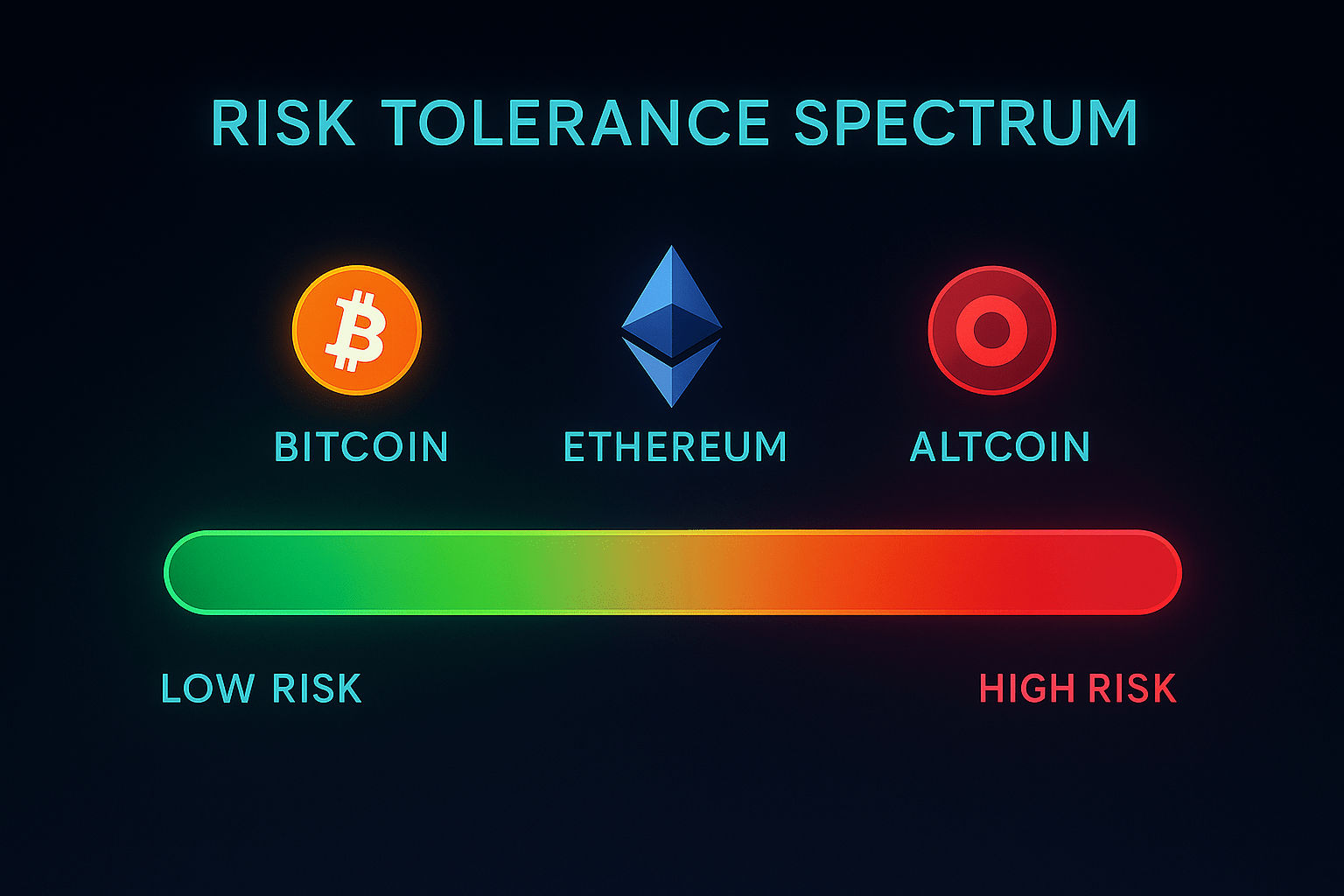
This is the most professional approach: allocate more to safer trades, less to riskier ones.
Scenario: A $20,000 Yield Stack
On BTX, you see two opportunities:
- BTC Basis Trade (Low Risk)
- Stable funding, deep liquidity.
- APR: 12%.
- Smooth execution.
- Altcoin L/S Arb (High Risk)
- Wide spreads, thin liquidity.
- APR: 45%.
- Prone to sudden flips.
The Thought Process
- BTC Basis: This is the bread-and-butter trade. You can size larger because risks are lower and margins are predictable. You allocate $2,000 (10% of stack).
- Altcoin Arb: Tempting APR, but dangerous. You size much smaller — $500.
The Key Insight
Risk-based sizing flips the beginner instinct on its head.
Amateurs chase the 45% APR and overweight it. Professionals overweight the survivable trade, even if the yield headline looks lower.
It’s not about chasing the biggest carrot. It’s about staying alive to eat another day.
5. Managing Total Exposure
Sizing isn’t just about single trades. It’s also about the whole portfolio.
Without limits, traders fall into the trap of “stacking yield” endlessly. APR looks amazing… until correlated risks hit all at once.
The three dangers to monitor:
- Total Notional Exposure – Leverage can multiply your footprint far beyond your actual capital.
- Concentration Risk – Three ETH trades aren’t diversification. They’re one big ETH bet.
- Liquidity Risk – Altcoin trades that look great on paper can become exit traps.
Professional Rules of Thumb
- Cap per-asset exposure (e.g., never more than 20% in one coin).
- Cap notional leverage (e.g., never more than 3x capital).
- Always stress-test for major swings.
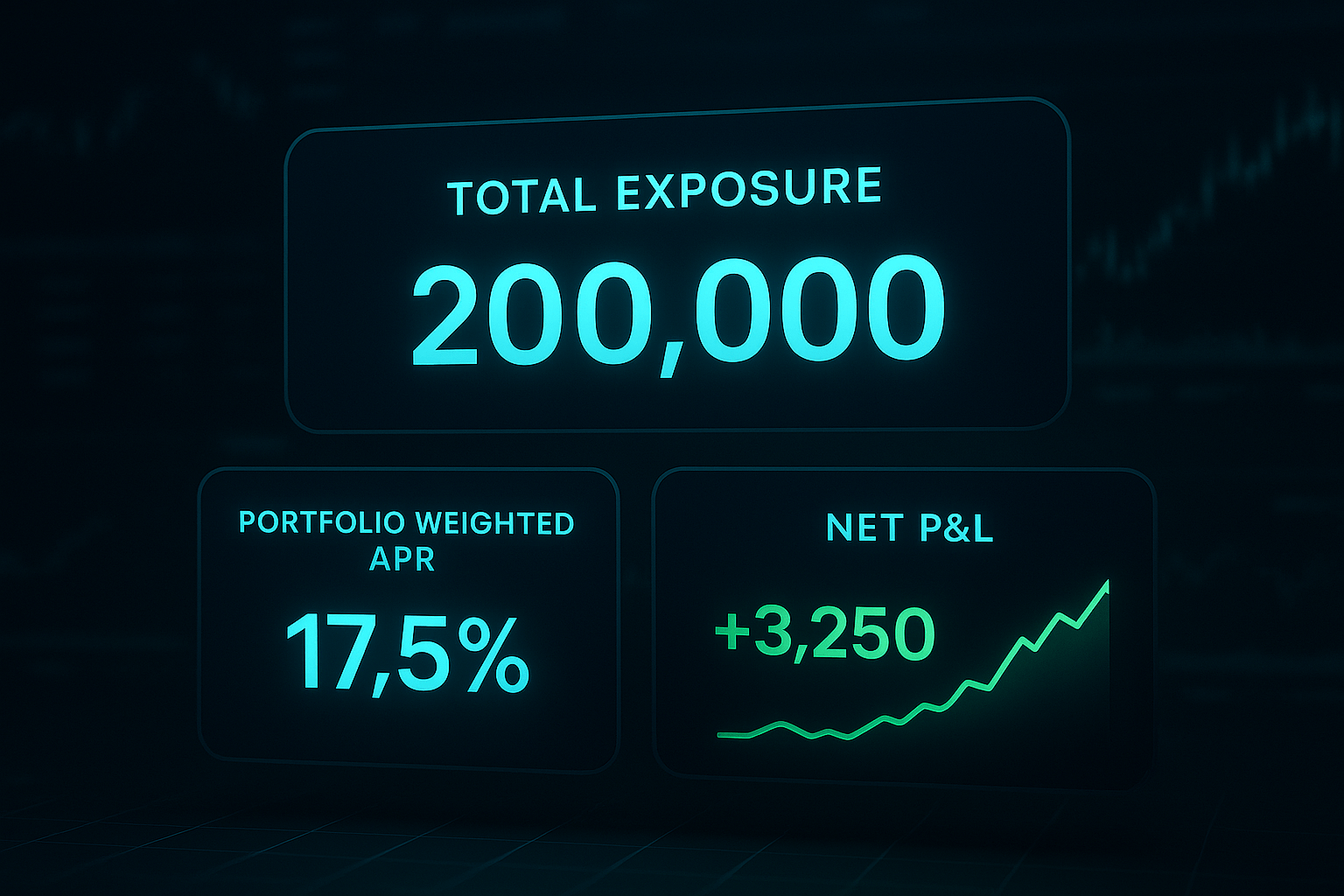
This is where BTX’s dashboard comes in. Total Exposure, Weighted APR, Net P&L... all in one view.
Professionals check this daily. Not to chase APR, but to ensure ballast is evenly distributed.
6. Pyramiding & Scaling
No trade is static. Conditions evolve. That’s where scaling comes in.
- Pyramiding: Increasing exposure in a safe, stable trade to squeeze extra yield.
- Scaling Down: Trimming size when conditions weaken to protect capital.
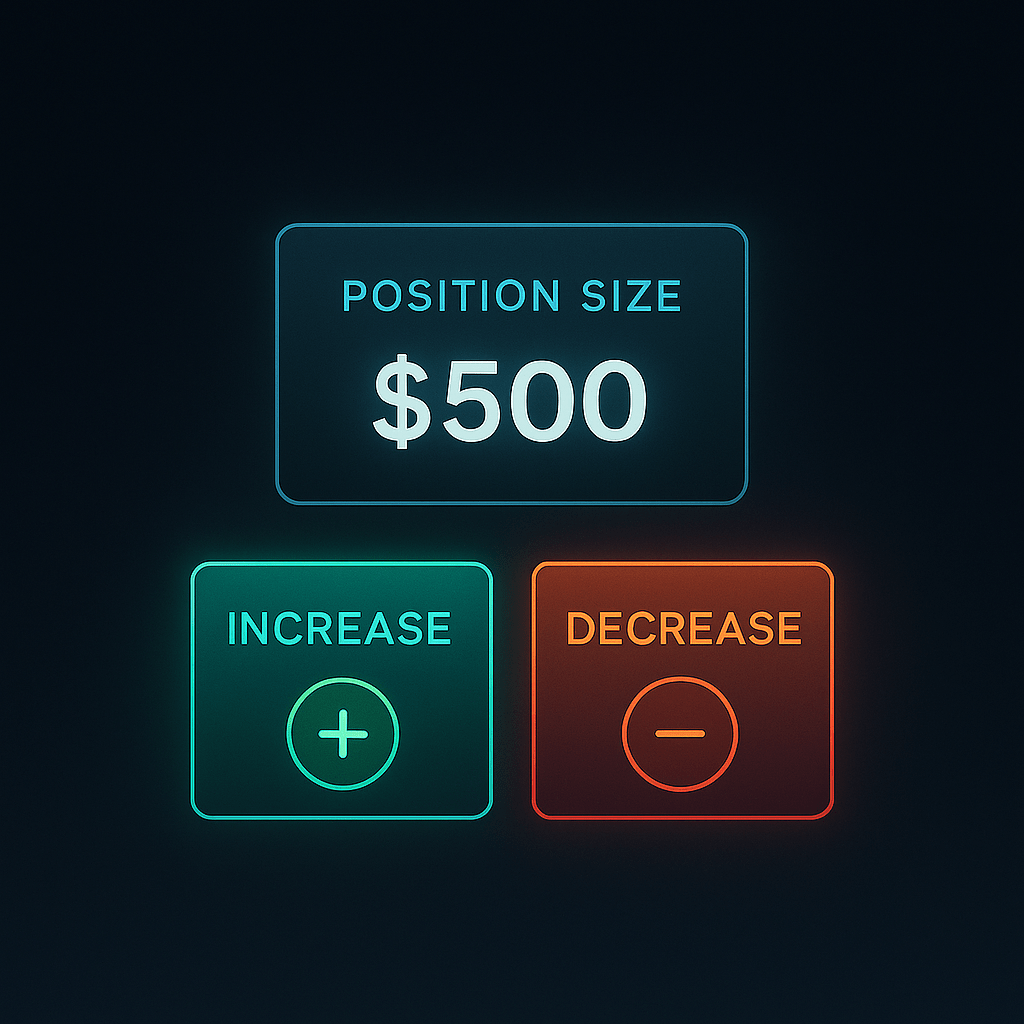
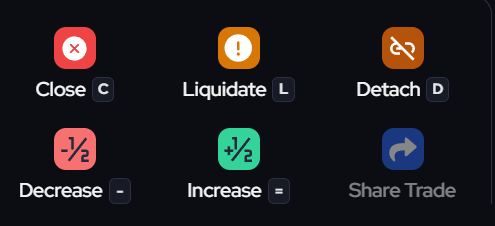
Imagine your BTC basis trade is running smoothly. You “Increase” by $1,000. A week later, funding softens. You “Decrease” by $500.
Each move is deliberate, not emotional.
Scaling is the art of adjusting sails before the storm hits.
7. The Discipline Dividend
The market doesn’t reward greed. It rewards discipline.
The Discipline Dividend is invisible in the short term, massive in the long term.
- The undisciplined trader sizes too big, blows up, and resets to zero.
- The disciplined trader compounds steadily and never resets.
Over years, that gap is exponential.
Delta-neutral isn’t about chasing headlines. It’s about building a machine that survives every season.

8. Conclusion
Capital management isn’t sexy. It doesn’t trend on X.
But it’s the difference between tourists and professionals.
If you take away one thing:
- Separate speculative vs. yield stacks.
- Size trades with discipline, not greed.
- Manage exposure like ballast in a ship.
- Scale methodically.
This is how you compound wealth without blowing up.
And if you want to operationalize it? That’s why BTX exists. It handles the execution so you can focus on strategy.
📖 Read more: Position Sizing & Capital Allocation for Delta-Neutral Strategies