Understanding the Risks in Delta-Neutral Trading (And How BTX Helps You Manage Them)
Delta-neutral isn't risk-free. Learn to manage execution, funding & liquidation risks. This guide shows how BTX helps you trade smarter.
In the chaotic world of crypto trading, delta-neutral strategies feel like a port in a storm. The pitch is simple: earn yield from market structure like funding rates and basis spreads, without betting on price direction.
And the pitch works. Done right, trades like basis and reverse basis are significantly less volatile than taking naked directional exposure. But "lower risk" is not "no risk."
In fact, the risk profile of delta-neutral trading is what separates serious practitioners from the wreckage of overconfident newcomers. The risks aren’t always obvious. They don’t show up with flashing red candles. They accumulate quietly: bad entries, funding flips, liquidation traps.
What makes or breaks you isn’t the strategy. It’s how well you monitor and manage these very specific, mechanical forms of risk.
This guide breaks delta-neutral risk into five categories, and shows how BTX helps you track, mitigate, and stay ahead of each one.
1. Execution & Slippage Risk: Winning or Losing at the Starting Line
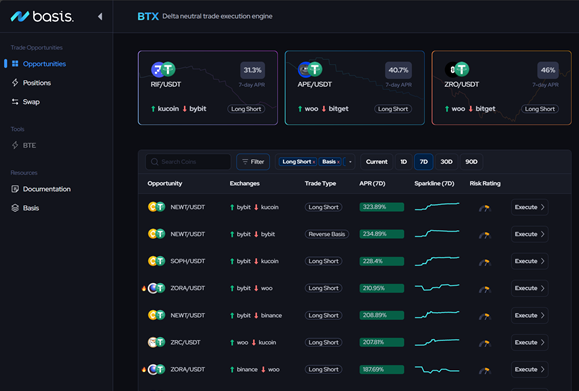
The Risk: Delta-neutral trades are built on capturing thin edges. A successful trade requires a precise, near-simultaneous entry on two separate legs. A manual trader, fumbling between exchange tabs, is racing against a market that moves in milliseconds. Any delay or imprecision results in slippage (getting a worse price than intended) or legging in (filling one side of the trade but not the other). One botched entry and the trade’s entire profitability can disappear before it even begins.
BTX as Mitigation: Logs Don’t Lie
BTX was built to kill slippage. It places both legs in parallel, executes atomically, and logs the entire process.
In the Logs tab, you can literally see the engine work:
- "Execution started"
- "Volume check passed"
- "Execution finished with 0 retries"
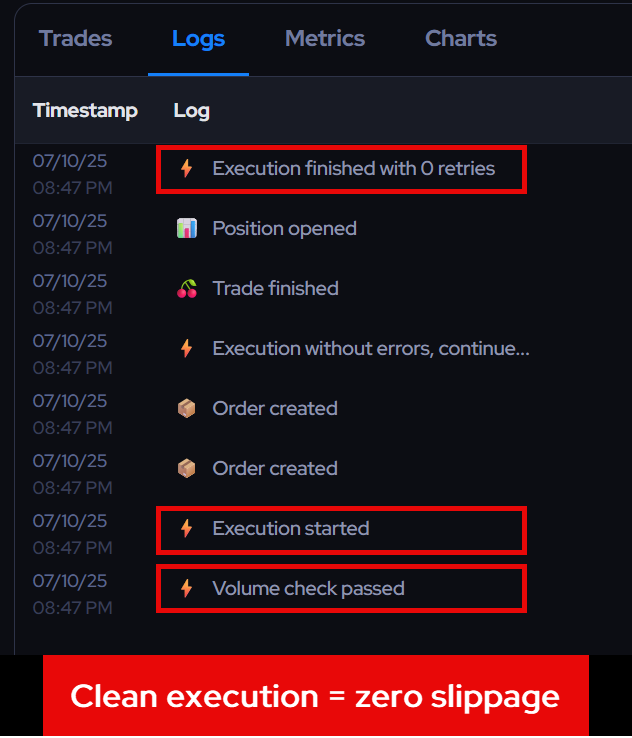
This is more than transparency. It’s proof. A timestamped audit trail that shows the trade went through cleanly. And in the Position Details, you can verify that both legs are perfectly matched: no drift, no overexposure. The hedge was clean from the beginning.
2. Funding Rate & Profitability Risk: When Your Engine Becomes a Leak
The Risk: You’re not betting on price. You’re harvesting yield from funding rates. But that yield is dynamic. That delicious +60% APR can slide to +6%, or worse, flip negative. For a classic basis trade, your profit engine becomes a cost center. For a reverse basis trade, your primary risk has just materialized. This is where delta-neutral turns tricky: your "yield engine" can suddenly start leaking capital.
BTX as Mitigation: Real-Time Yield Surveillance
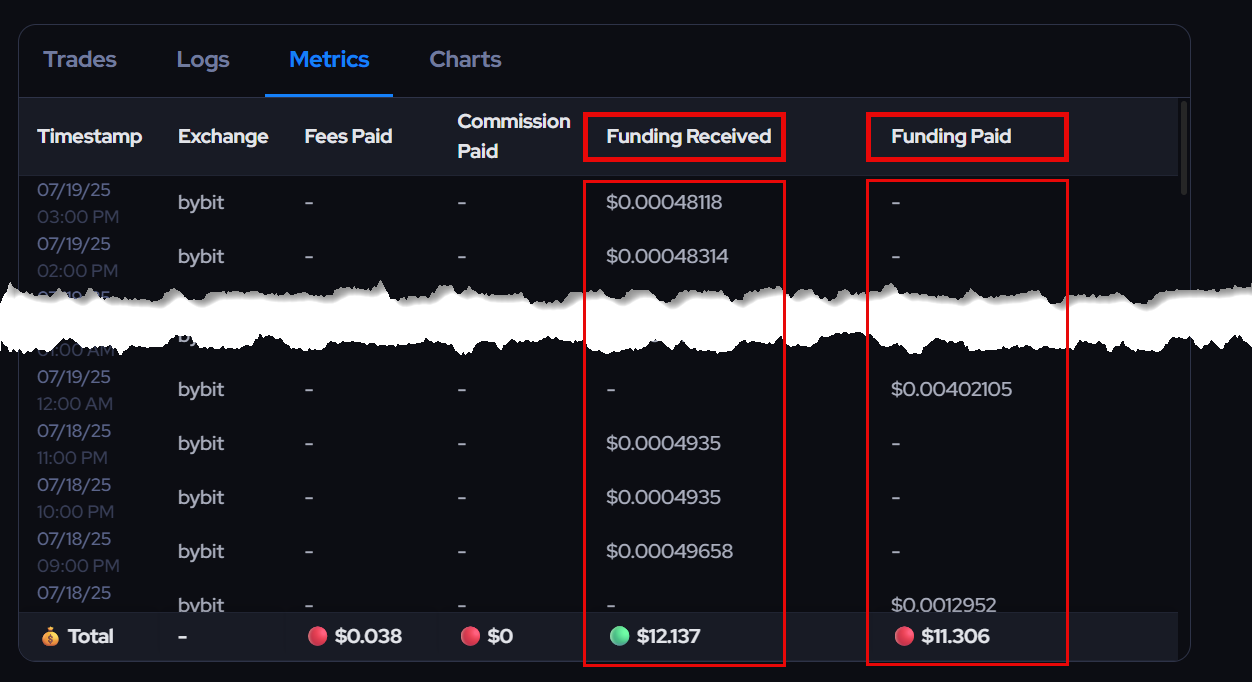
The Metrics tab gives you the funding truth. Every single funding payment—received or paid—is recorded with timestamp, exchange, and amount.
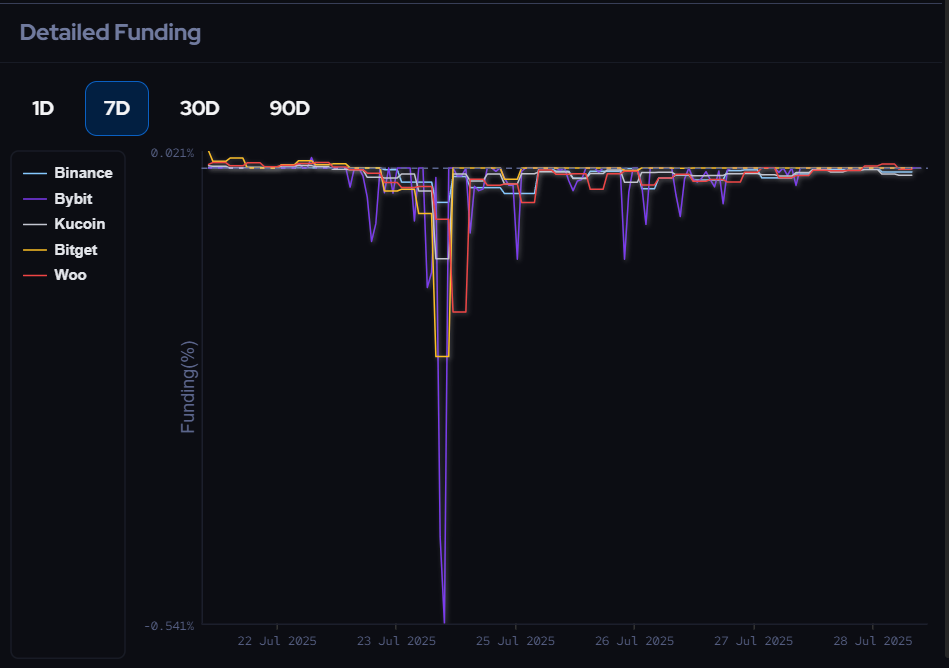
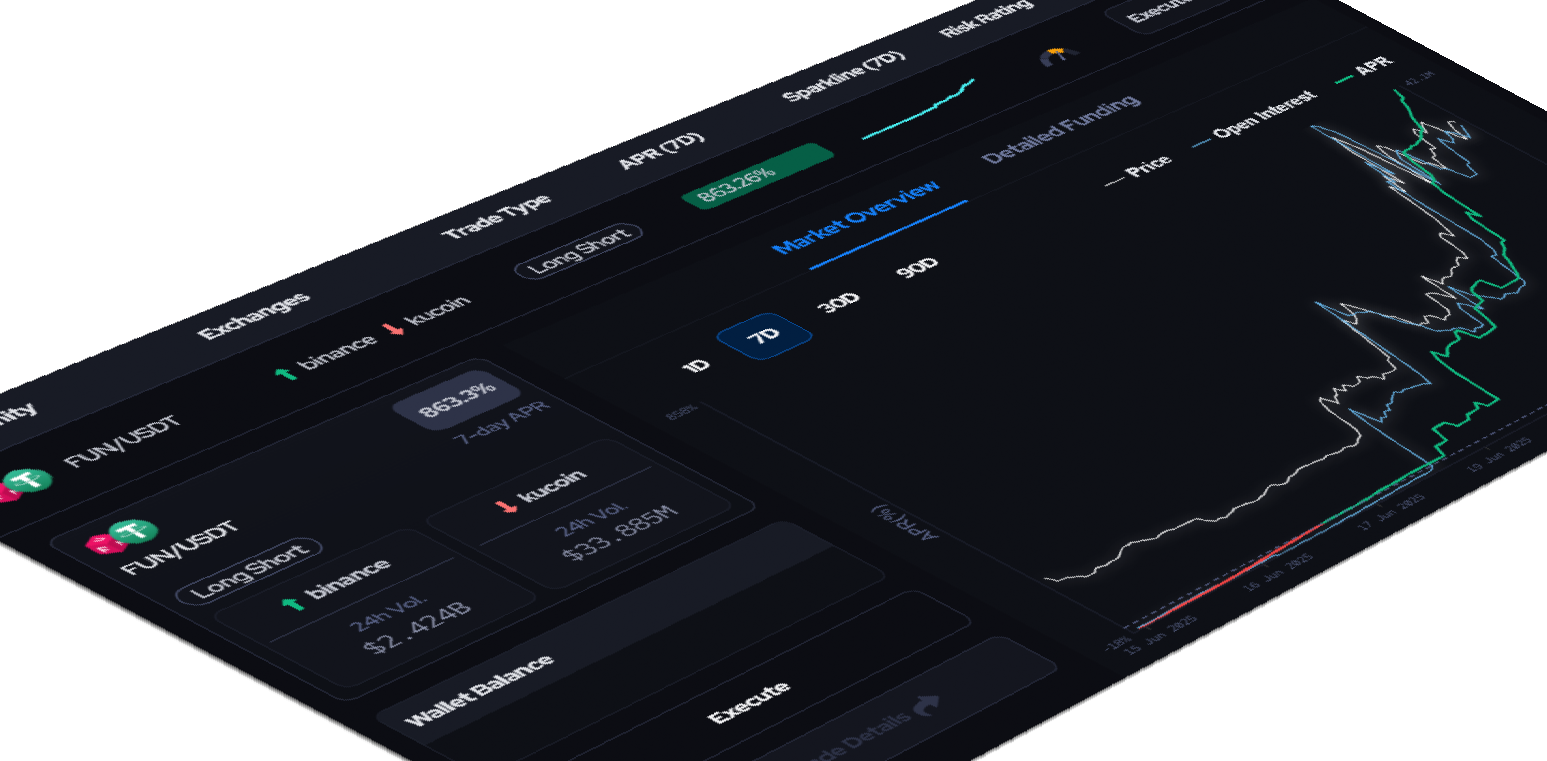
The Charts tab shows how funding evolves across exchanges. And front-and-center, the live Position APR acts like a check engine light. If it dives, you know the engine's stalling. That’s your cue.
3. Margin & Liquidation Risk: The Two-Sided Threat
The Risk: Even delta-neutral trades can get liquidated. Each leg lives on its own island. Exchanges don’t care that you’re hedged overall; they care about the margin on each individual leg.
In a Reverse Basis Trade:
- If the price spikes up, your spot short gets hit.
- If the price dumps, your perp long gets squeezed.
In a Classic Basis Trade:
- A violent pump puts your short perpetual at risk.
Losing one leg to liquidation is a catastrophic failure, as it instantly exposes your remaining leg to raw market risk.
BTX as Mitigation: Risk on Display
The Margin field in Position Details keeps your collateral exposure clear. More importantly, BTX introduces a Risk Velocimeter: a simple visual cue with real math behind it.
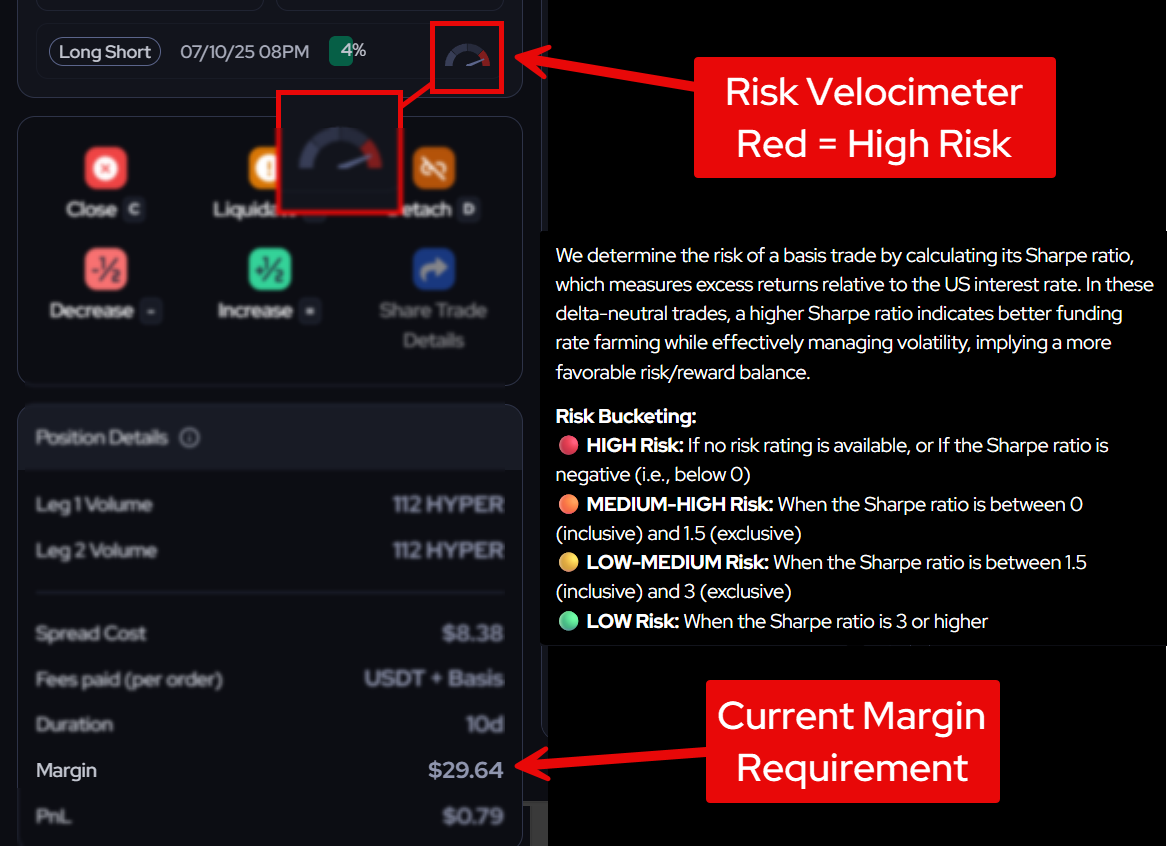
It uses the Sharpe Ratio to measure how efficiently your position is earning relative to its volatility. Green? You're good. Orange? Stay sharp. Red? Something’s wrong.
And if you need to act, tools like Close, Liquidate, or Decrease are right there, one click away.
4. Position Monitoring & Oversight Risk: The Danger of Flying Blind
The Risk: As you scale into multiple trades, different pairs, and various exchanges, the risk becomes logistical: forgetting you even have a position open. These aren’t dramatic blowups. They’re slow, preventable leaks from a scattered portfolio.
BTX as Mitigation: The Portfolio Control Center
The Positions dashboard puts everything in one view: Total capital deployed, Weighted APR, Net P&L.
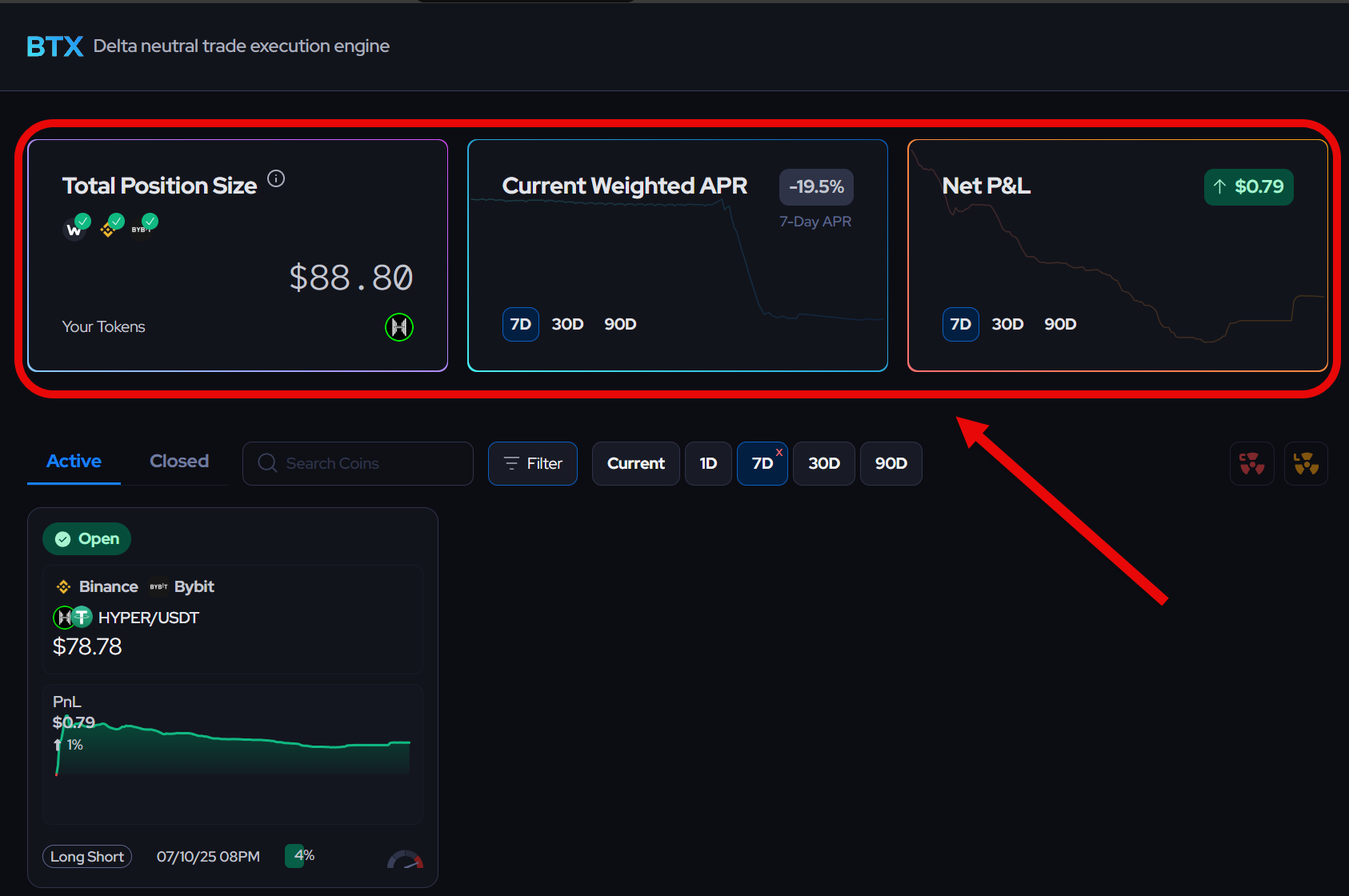
One scroll shows all your active trades. No more bouncing between tabs, APIs, or spreadsheets. BTX makes oversight frictionless. That alone prevents costly mistakes.
5. Performance Review & Learning: The Path to Getting Better
The Risk: What kills most traders isn’t one mistake. It’s making the same mistake repeatedly because they lack the data to analyze what went wrong (or right).
BTX as Mitigation: The Automated Trade Journal
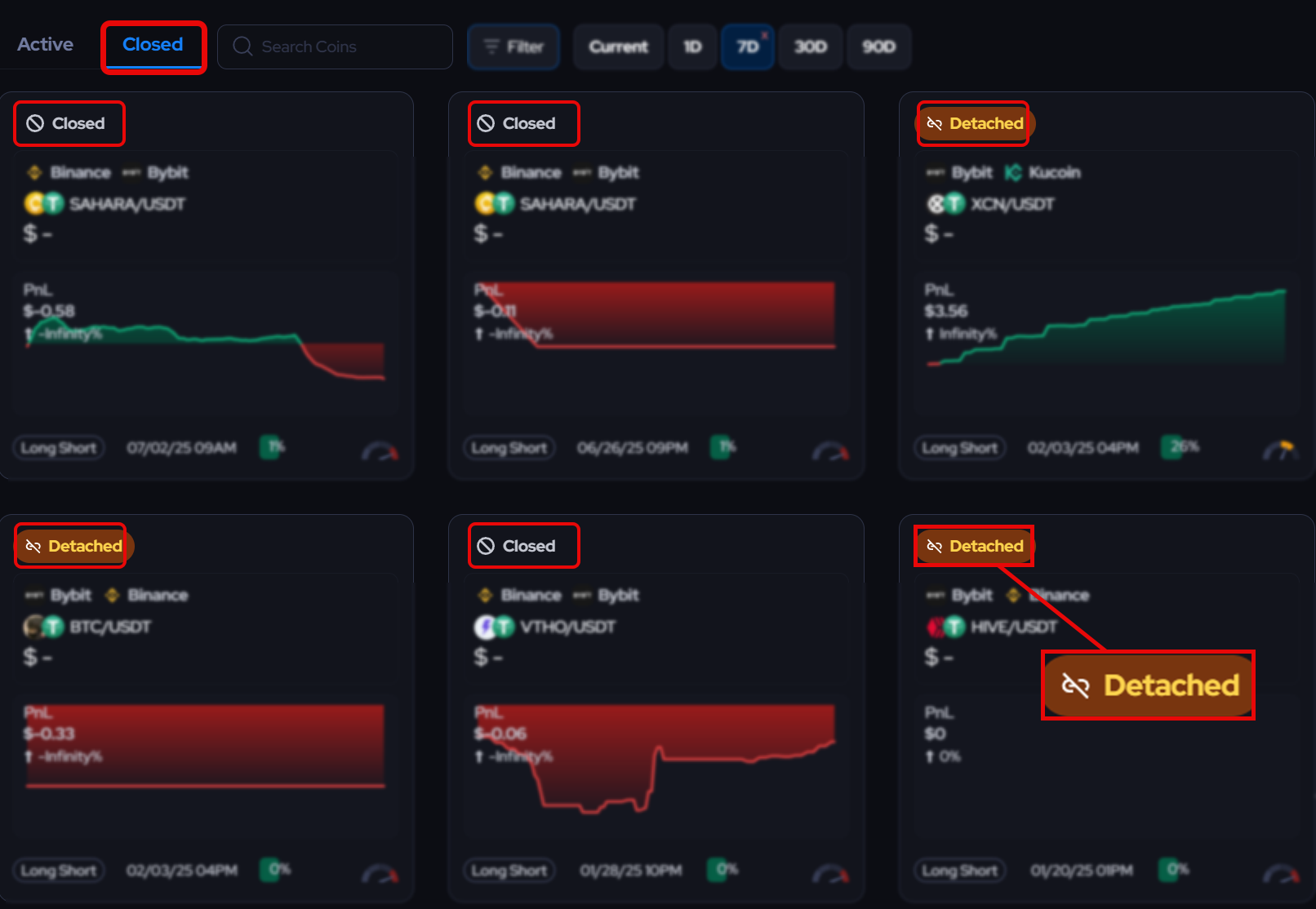
The Closed tab is your memory bank, housing both completed and Detached trades for review.
Each trade gets logged. You can go back and check duration, P&L, execution quality, and funding history. Detached trades are red flags: they show where something went wrong with execution or syncing, providing a crucial learning opportunity. If you want to run this strategy long term, BTX gives you the data to evolve.
What’s Coming Next: The Future of Risk Management in BTX
BTX is already a serious risk management hub. But more is coming:
- Programmable Alerts: Custom triggers for funding flips, margin drops, etc. Alerts will hit via Telegram, email, and app.
- Stops & Triggers: Optional stop-loss or take-profit automation. You define the rules.
- Isolated Margin Accounts: Capital ring-fencing so one trade can't ruin your entire stack.
These features will make BTX not just a monitor, but an active shield against execution and exposure risk.
Final Word: The Real Edge Is Risk Control
The promise of delta-neutral trading is seductive: earn yield, stay hedged, avoid price drama. And it's real. But it's not passive.
These trades demand care, monitoring, and reaction. BTX started as an execution engine. It’s become something deeper: your dashboard for high-performance risk management.
It won’t remove risk. Nothing does. But it gives you what professionals rely on:
- Transparent data
- Real-time signals
- Clean execution
- A unified view
That’s what turns delta-neutral into an edge.
Ready to trade smarter?
If you're running delta-neutral strategies without BTX, you're flying blind.
BTX gives you precise execution, real-time performance monitoring, and risk tools built specifically for funding rate traders.
👉 Start using BTX now
(any Solana wallet)
Glossary
Delta-Neutral: A trading strategy where your long and short positions offset each other, aiming to eliminate price risk.
Slippage: The difference between the expected price of a trade and the price at which it actually executes.
Legging In: Opening only one side of a two-legged trade, exposing the trader to directional risk.
Basis Trade: Long spot, short perp. Profits from the perp funding rate or the convergence of the spot and perp price.
Reverse Basis Trade: Short spot, long perp. Profits from negative funding on the perp side.
Funding Rate: Periodic payments exchanged between long and short perp traders to keep the perp aligned with spot prices.
Sharpe Ratio: A measure of risk-adjusted return. Higher is better.
APR (Annual Percentage Rate): The rate of return you'd earn if the current conditions held for a full year.
Liquidation: Forced closure of a position by an exchange due to insufficient margin.
Isolated Margin: Margin allocated to a single position, protecting the rest of the portfolio from a loss.
Detached Position: A trade where one or both legs couldn’t be automatically closed or synced by BTX, requiring manual action.
Risk Velocimeter: A visual risk gauge in BTX that summarizes the position’s risk based on its Sharpe Ratio.
Logs: A time-stamped record of trade execution steps inside BTX.
Metrics Tab: A table showing fees, commissions, and funding payments associated with a trade.
Charts Tab: Graphs visualizing price, open interest, APR, and funding rate movements.
Join the community
Want help, insights, or ideas from fellow delta-neutral traders?
Join our Discord community and get connected. If you have the Basis NFT, you have access not only to the public channels, but also the members-only area for NFT holders.
We talk trade setups, funding rates, market risks, and how to get the most out of BTX, together.